
Large Format Tile Circular Saw: Water Cooling Guide
By Maya Tan • 31st Mar
Large format tile (24×48 inches and beyond) demands a different approach than standard tile work. A large format tile circular saw with water cooling isn't a luxury; it's a necessity when precision and repeatability matter. This guide walks you through the mechanics, setup decisions, and measured outcomes that separate clean cuts from expensive mistakes.
Why Water Cooling Changes Everything for Porcelain Tile Cutting
What exactly does water do in a tile saw?
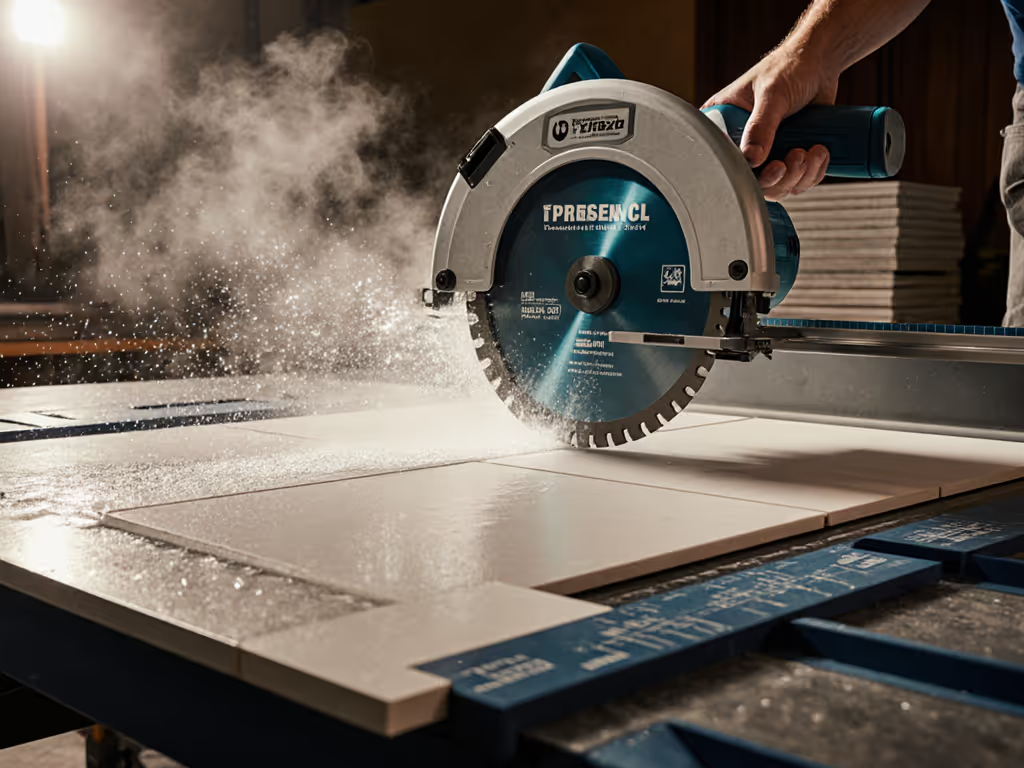
Water serves three critical functions: cooling, lubrication, and dust suppression. When a diamond blade cuts porcelain at speed, friction generates heat fast. Without continuous water flow, blade temperatures spike, causing warping, cracking, or premature dulling. Water reduces friction at the cutting edge and acts as a heat sink, protecting both the blade and the tile from thermal stress that leads to chipping and cracking.
On dust control: a porcelain tile cutting saw with water capture eliminates the respiratory hazard. Silica dust (a known carcinogen in respirable form) gets suspended in the water stream rather than becoming airborne. This shifts your setup from needing specialized respirators to meeting basic dust control standards. For indoor residential work or OSHA-regulated job sites, that's a game-changer. For detailed wet-cutting options that meet silica rules, see our engineered stone cutting guide.
How does blade life factor into the cost equation?
Data confirms that continuous water cooling extends blade life measurably. By reducing friction and heat, a wet saw preserves the diamond grit's keenness longer, delivering reliably good cutting performance and saving money over time. A blade that lasts 20% longer on high-volume jobs offsets the modest cost of maintaining the cooling system. I've logged cut counts across dozens of blades, and dry grinding burns through grit in half the time. To optimize budgets further, use our cost per cut blade analysis to plan sharpening and replacement intervals.
Wet Table Saw vs. Rail/Bridge Saw: Metrics That Matter
When does a wet table saw work, and when does it fail?
Wet table saws excel for tiles up to approximately 36 inches. Water cools the blade and captures silica dust effectively. But there's a hard constraint: small tables let larger pieces sag at mid-cut. Once the tile's center of gravity drops below the blade plane, the cut becomes unpredictable (binding risk spikes, and accuracy suffers).
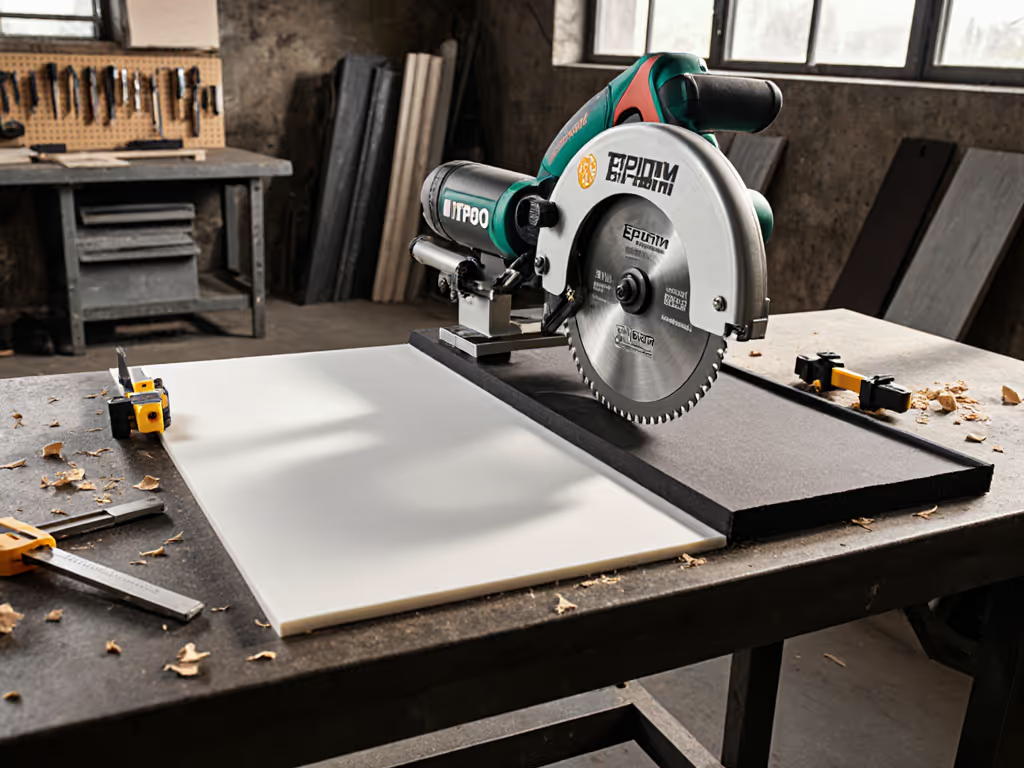
Rail and bridge saws (brands like Battipav, Raimondi, Sigma Kera-Cut) solve this by mounting the cutting head on a sliding rail that travels the full length of the tile. The tile stays put; the blade moves to the cut. This design is essential for 24×48-inch and larger formats. The trade-off: higher cost and more footprint. But for large-format work, the accuracy and repeatability gain justify the investment.
Outcome metric: On a wet table saw cutting a 24×36 tile, mid-cut sag introduces ±2-3° deviation from square. On a properly supported rail saw, deviation stays under ±0.5° when the machine is calibrated. That's the difference between edge-gluing planks flush and shimming them out during install. For a deeper dive into interpreting cut accuracy and torque stability, see our performance metrics guide.
The Three-Pass Cutting Protocol
Why does blade height matter so much?
Dial in the blade height so the rim clears the tile by 1/8 inch (any higher and the blade wanders). This small tolerance prevents side deflection under load. Too low, and the blade contacts the table, killing speed and overheating the system.
What's the three-pass cutting method, and why does it reduce blow-out?
Here's the protocol:
- Pass 1: A shallow 1/8-inch score to open the glaze. This breaks the surface tension and gives the blade a clean start.
- Pass 2: A half-depth cut (approximately 1/4 inch on most 10mm porcelain). You're now cutting through the body while water keeps the blade cool and the kerf clear of slurry.
- Pass 3: Full depth at a feed rate that keeps the motor from bogging. Push is feather-light; if water quits flowing or you see steam, back off immediately and clear slurry.
Why three passes instead of one? Porcelain's brittleness means a single aggressive cut concentrates stress on a narrow zone, spiking breakage risk. Three lighter passes distribute load and give water time to flush dust and cool the blade between stages.
How do you prevent exit blow-out?
When the blade is within 1 inch of the exit edge, cut your feed speed in half. A strip of painter's tape over the exit line adds extra insurance, giving the glaze a split path and reducing chipping.
Practical Water System Setup
What's the best way to manage water circulation without clogging the pump?
Three field-tested strategies:
- Bucket-in/bucket-out: Feed clean water from one bucket and drain dirty water into another so fines settle out instead of recirculating. This is the simplest DIY approach and reduces pump wear.
- Filter socks or mesh screens: Place these over the pump trap to catch abrasive grit before it reaches the impeller. Inspect and clean them between jobs or after every 4–6 hours of cutting.
- Fringe or hog-hair mats: Position these around the saw to catch overspray and prevent slip-and-fall claims. On a job site, wet concrete is a liability.
Does water temperature affect cuts?
Yes. Below 40°F, add a few ounces of RV antifreeze to keep lines from icing on exterior jobs. Frozen lines kill water flow, and you'll discover it mid-cut when the blade overheats. In hot climates, water evaporation is less critical than in cold, but ambient temperature still impacts blade cooling efficiency, and hotter environments need slightly higher flow rates.
Cutting Curves and Holes
How do you drill circular penetrations in large format tile?
Circular penetrations for plumbing look intimidating on a 24×48 tile, but they follow the same physics as smaller work. Mark the center, apply masking tape for grip, and start a diamond holesaw at a 15° angle. Rock the bit upright once it bites, maintaining low RPM (approximately 400-600) and continuous water.
For cut-outs larger than 2 inches, "connect-the-dots" with multiple plunge cuts, then smooth the arc with a contour blade or 50-grit electroplated pad. This staged approach prevents stress concentration and keeps edges clean.
Water-Cooled Tile Saws: The Essential Checklist
What needs to happen before you cut?
- Inspect the diamond blade for chips or uneven wear. A damaged blade wanders and accelerates dulling.
- Verify continuous water supply. Water reduces friction and keeps the blade cool, preventing premature wear while ensuring peak performance. Run water for 10 seconds before you start; see the arc of spray hit the blade.
- Install and secure the blade guard. The guard protects your fingers, channels water back onto the blade to reduce friction, preserves blade life, and keeps cuts smooth. It also prevents overspray. Review our circular saw safety guide for PPE and kickback prevention fundamentals.
- Support the tile fully. Large format pieces sag without proper support. Use two points minimum (one near each side of the cut line).
- Stage the water system. Whether you're using a built-in reservoir or a bucket setup, ensure the system is primed and flowing before the blade touches tile.
Key Takeaways: Outcomes Over Claims
Water-cooled tile saws deliver measurable advantages for large format work: extended blade life, lower dust exposure, reduced chipping, and repeatable square cuts. Wet table saws work for formats to 36 inches; beyond that, rail and bridge saws become essential. The three-pass protocol minimizes blow-out and distributes load safely across brittle materials.
Dust control, blade longevity, and cut accuracy all hinge on one thing: a steady, clean water supply and disciplined technique. Skip either, and outcomes deteriorate fast. Commit to both, and your cuts stay square, your blades stay sharp, and your installs go smooth.
Setup is replicable (bucket-in and bucket-out, feather-light push, painter's tape at the exit), and you've engineered a process that works the same way on cut 1 and cut 101. Data wins arguments: measure your setup's performance against your tolerance standards, log your blade costs and life span, and build a system tailored to your work. That's how you move from hoping for good cuts to knowing you'll get them.
Related Articles