Circular Saws for Auto Bodywork: Metal Cutting
By Luca Pereira • 8th Apr
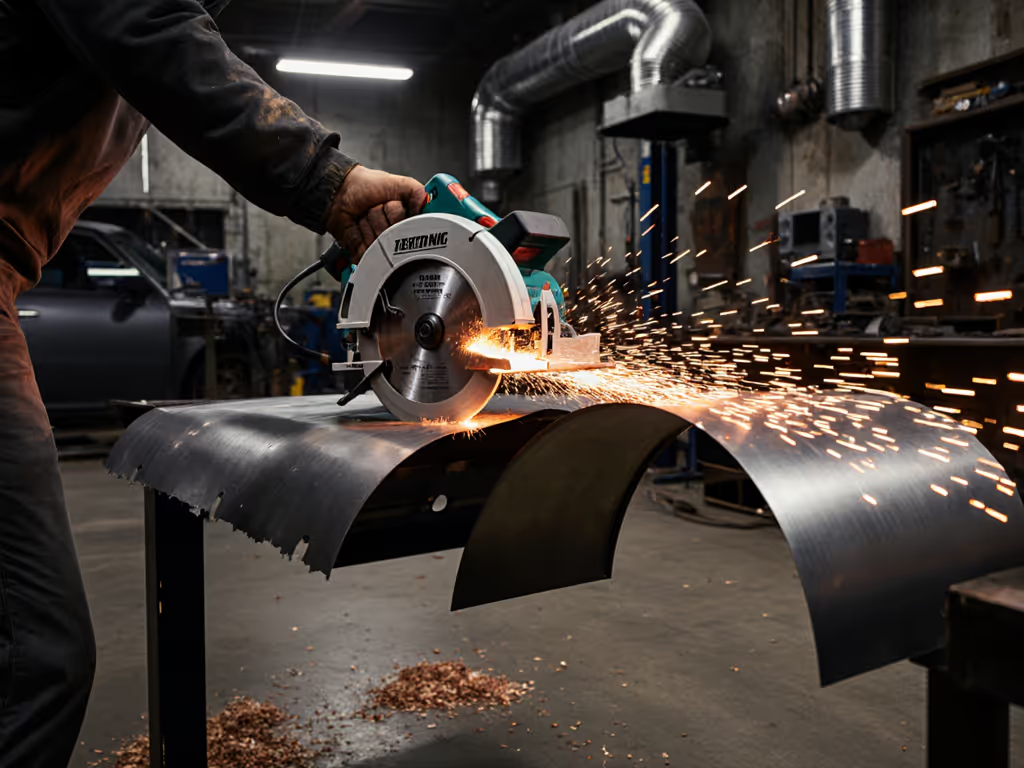
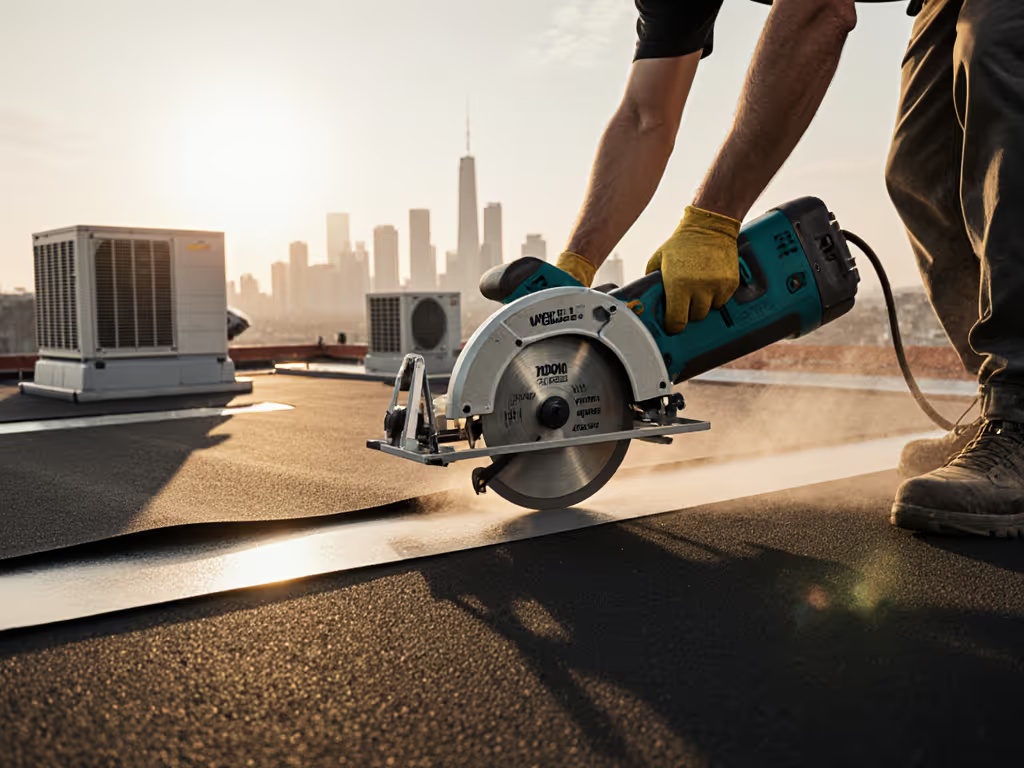
Circular power saws are often considered primarily woodworking tools, but their role in car repair cutting tools extends into bodywork when matched to the right blade, setup, and material constraints. Auto bodywork cuts differ fundamentally from framing carpentry: panel edges must be clean and precise, materials range from thin aluminum to composite patches, and waste compounds project cost and rework anxiety. This analysis examines when a metal cutting saw fits the automotive toolkit, how it compares to reciprocating and pneumatic alternatives, and what ROI looks like in real-world automotive bodywork tools scenarios. For a deeper dive into saws engineered for metal cutting, see our metal-specific circular saw performance guide.
The Setup Economics of Circular Saws in Auto Bodywork
A circular power saw for metal cutting demands a different approach than its wood-cutting cousin. The blade becomes the primary cost variable: high-speed steel or carbide blades rated for ferrous and non-ferrous metals run $30-$80 per blade, and dulling accelerates when cutting composite substrates or painted surfaces. Setup cost (a cutting guide, clamping kit, or track-saw rail) can double or triple the tool's base price. For a DIY weekend bodywork job, the upfront commitment feels steep. For a shop seeing two to three metal-cutting projects monthly, the math changes.
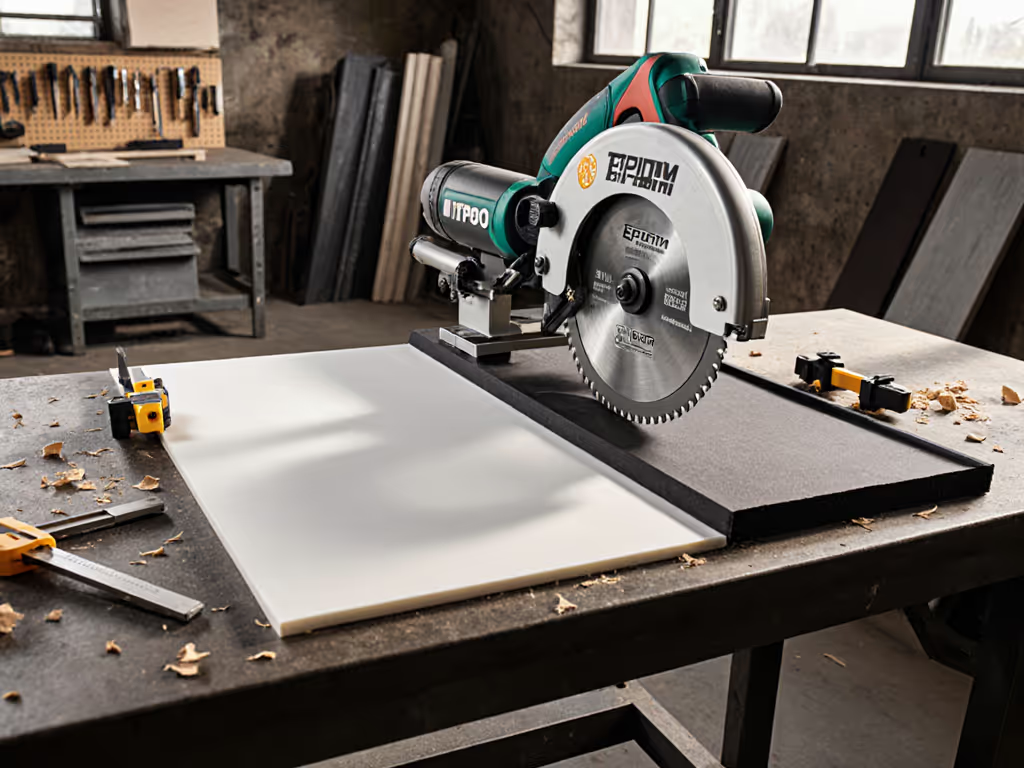
The constraint most shops face: space. Auto bodywork happens in tight quarters (a driveway, a small garage corner, or a customer's site). A car panel cutting task requires stable support of a quarter panel or door skin, often requiring a sacrificial backing board, clamps, and clear sightlines. Circular saws demand outfeed space and solid workholding; a sheet sagging mid-cut will bind the blade and wreck the edge. If binding or sudden stoppages are a recurring problem, troubleshoot with our circular saw binding fixes. This is where scenario-based decision-making matters.
Price matters, but waste and rework cost more.
I learned this the hard way: a bargain blade burning through birch ply on a cabinet project chipped edges and consumed my spare sheet. Replacing it with a mid-tier combo saved the project and two hours. In auto bodywork, a $20 panel ruined by a binding cut or tear-out costs far more than investing in the right blade and guide system upfront.
Circular vs. Reciprocating Saws for Metal Bodywork
Reciprocating saws dominate auto bodywork conversations, and for good reason. A pneumatic reciprocating saw, such as the Eastwood Reciprocating Pneumatic Metal Saw, cuts intricate shapes and curves in aluminum, sheet metal, and composites at 5,000 strokes per minute, handling material up to 1/16" thick and requiring just 3.5 cfm at 90 psi. The reciprocating action excels at demolition-style cuts, plunge starts, and navigating tight corners, like removing a rusted door hinge area or opening access holes in fenders.
Circular saws, by contrast, excel at straight cuts and panel trimming where edge quality matters. A circular blade leaves a smoother, cleaner edge on thin metal than a reciprocating saw's rapid chopping motion. For cosmetic work or glue-joint preparation, that finish advantage justifies the setup cost.
Comparative Metrics
| Criterion | Circular Saw (Metal Blade) | Reciprocating Saw (Pneumatic or Electric) |
|---|---|---|
| Edge Quality | High (smooth, clean surface) | Moderate (slight chatter, rippling possible) |
| Speed on Straight Cuts | Fast (full blade diameter engaged) | Moderate (stroke-limited feed rate) |
| Curve/Plunge Capability | Limited (requires starter hole or edge start) | Excellent (full plunge, intricate paths) |
| Setup Complexity | Medium (guide, clamping, backing board needed) | Low (minimal setup, hand-held orientation) |
| Dust/Chip Control | Good (if connected to shop vac) | Variable (pneumatic tools are dustier) |
| Vibration & Fatigue | Moderate (gyroscopic forces at high RPM) | Lower (balanced push-pull motion, lighter tools) |
| Blade Cost (per cut hour) | $15-$25 for ferrous metal blades | $10-$20 for reciprocating blades |
| Best Use Case | Trim panel edges, cutting patch panels, straight crosscuts | Demolition cuts, fender opening access, door skin removal, plunge cuts |
When Circular Saws Win
A circular metal cutting saw becomes the right choice when:
- Edge aesthetics matter: Trimming a patch panel or door skin where the cut edge will be visible or glued.
- Volume is predictable: Three to five similar cuts on a project justify guide-rail setup time.
- The cut is straight or gently curved: Door posts, quarter panel edges, hood leading edges.
- Material thickness is consistent: Thin aluminum or composite substrates (up to 1/8") cut with precision.
- Dust control is mandatory: Indoors or near clients; circular saws suppress dust better with a vac-connected shroud.
When Reciprocating Saws Win
Reciprocating saws dominate when:
- Speed and accessibility matter more than finish: Cutting access holes, opening sealed seams.
- The geometry is complex: Plunging into the middle of a panel, cutting around obstruction, intricate demolition.
- One-handed control is necessary: Tight quarters, overhead work, unstable surfaces.
- Portability is paramount: A pneumatic reciprocating saw is lightweight and compact; a circular saw demands clamping and guides.
- Variety of cuts is high: Different angles, curves, and material types in one job minimize setup ROI.
Material-Specific Guidance for Auto Bodywork
Aluminum Panels & Extrusions
Aluminum cuts cleanly with a carbide-tooth blade rated for non-ferrous metals (typically 60-80 teeth, negative or neutral hook). Circular saws maintain edge quality well. Feed rate matters: pushing too hard causes binding; too slow causes edge rippling. A guide rail or straight-edge clamped parallel to the cut line reduces setup time and removes the straight line by eye anxiety. For step-by-step setups and DIY jigs, follow our repeatable rip cut guide systems.
Composite & Fiberglass Patches
Composites dull blades faster than metal. A fresh blade is non-negotiable; attempting a composite crosscut with a worn blade generates heat, melts resin, and ruins the edge. Reciprocating saws handle composites more tolerantly because the motion is gentler and less heat-intensive. If using a circular saw, reduce RPM (if variable-speed) and use a downstroke-cutting blade orientation to minimize chip-out on the visible face.
Steel Body Panels & Rust-Cut Repair
Thick or rusted steel demands a reciprocating saw's demo-grade aggression. Circular saws can handle clean, thin steel (under 1/16"), but a reciprocating saw is faster and safer on corroded or structural repair sections.
The Dust and Safety Equation
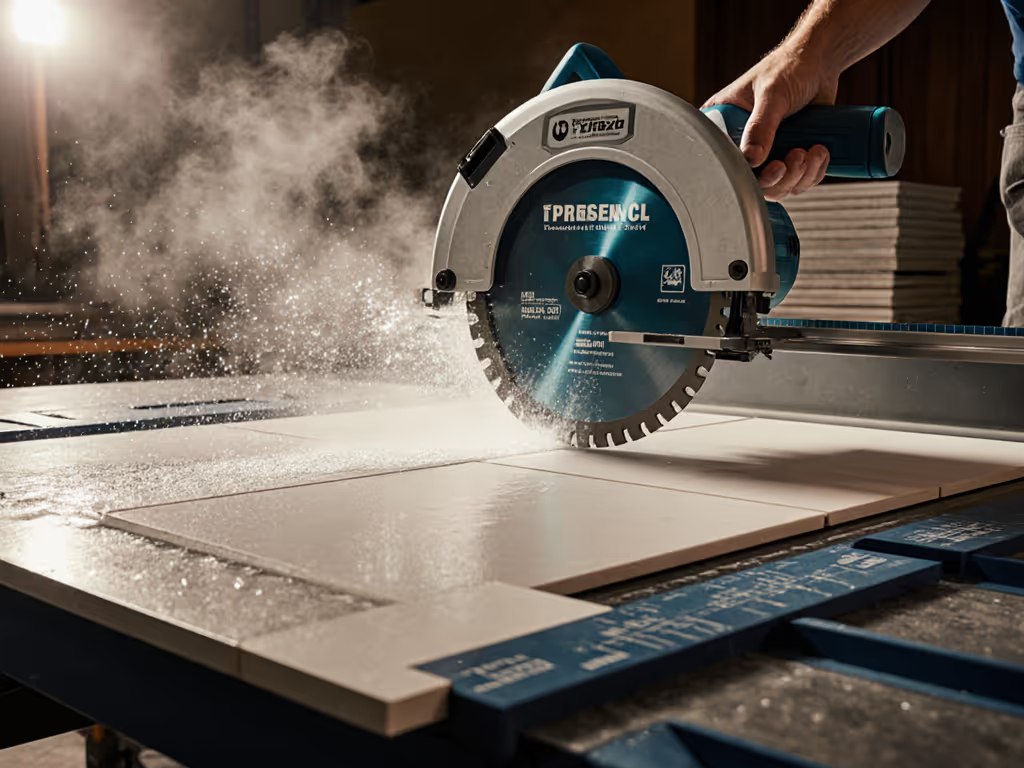
Metal cutting generates fine dust and chips. A circular saw with a dust shroud and shop-vac connection captures 60-75% of chips; a reciprocating saw, especially pneumatic, scatters chips and creates airborne dust. For indoor bodywork or customer sites with silica or respiratory concerns, this difference justifies the circular saw setup despite lower tool mobility.
Clamping and workholding are non-negotiable safety requirements. Review essential PPE and setup practices in our circular saw safety guide on preventing kickback. Panel sag mid-cut causes blade binding, kickback risk (especially with corded circular saws), and edge failure. Budget 5-10 minutes for clamp placement before any cut. A pneumatic reciprocating saw eliminates kickback risk but demands firm two-handed control and clear exit paths for stray chips.
Cost-per-Clean-Cut Analysis
Let's model a common scenario: a shop performs two to three door-skin replacements monthly, each requiring two panel crosscuts and three edge trims (10 metal cuts/month, ~120 cuts/year).
Circular Saw Setup:
- Tool: $80-$150 (mid-tier corded or budget lithium-ion)
- Guide rail/clamp kit: $40-$80
- Blades (5 replacements/year at $30 each): $150/year
- Vac shroud/dust collection: $25
- Year 1 total: ~$350-$500
- Per-cut cost: $3-$4 (fixed costs amortized over 120 cuts)
Reciprocating Saw Setup:
- Tool: $60-$120 (pneumatic) or $100-$200 (electric)
- Compressor or charger: already owned
- Blades (8-10 replacements/year at $12 each): $100/year
- Year 1 total: ~$200-$350
- Per-cut cost: $1.70-$2.90
The reciprocating saw wins on raw cost-per-cut. But factor in edge quality rework: if two circular-saw cuts per year require edge sanding or dressing (30 min @ $50/hr labor = $25) versus five reciprocating-saw edges needing rework ($60/year), the gap narrows to $200-$300 annually.
Over three years, the circular saw reaches competitive ROI if even a few rework callbacks are eliminated or if edge quality justifies a premium on a cosmetic repair.
Vehicle Modification Saws: Specialized Configurations
Some shops use modified circular saws with specialty setups for vehicle modification saws tasks:
- Wet-cut circular saws (water-cooled): Reduce heat and dust for closed-quarter work; cost $200-$400 but excel in customer homes.
- High-speed die grinders with cutting wheels: Lighter, more nimble, but slower and noisier; better for small, intricate cuts than full panel work.
- Oscillating spindle sanders adapted for metal: Niche, but useful for smoothing cut edges post-operation.
None of these replaces a solid circular or reciprocating saw; they supplement specific workflow needs.
Integration with Shop Workflow
The best automotive bodywork tools kit pairs complementary saws:
- Reciprocating saw (pneumatic or corded) as the workhorse: demo, plunge, geometry work, quick cuts.
- Circular saw with guide rail for aesthetic and high-volume straight cuts.
- Angle grinder with cut-off wheel for steel studs, bolt heads, and finishing burrs.
This approach trades platform lock-in risk (varied tool types = varied batteries, power sources) for task-specific competence and reduced rework waste. A shop investing in this trio over 18 months sees faster job cycles, fewer callbacks, and higher customer satisfaction than optimizing around a single saw type.
Blade Selection: The Hidden ROI Driver
Blade choice determines 60% of edge quality and 40% of tool life. For auto bodywork, budget-bin blades fail within 10-15 cuts on ferrous or composite; mid-tier carbide blades (60-80 teeth) sustain 50-100 cuts before noticeable dulling.
Blade ROI framework:
- Budget blade ($8-$12): 12 cuts before edge degradation, ~$1/clean cut.
- Mid-tier blade ($25-$35): 80 cuts before edge degradation, ~$0.35/clean cut.
- Premium blade ($50-$70): 150+ cuts, ~$0.35/clean cut, but higher upfront sting.
Mid-tier blades represent the sweet spot for small shops. Buy once, cry never applies here: a single premium blade that stays sharp for three projects beats swapping bargain blades weekly.
Final Verdict: Build Your Cut Kit
A circular power saw earns its place in an auto bodywork shop when:
- Edge quality directly impacts customer perception or rework costs.
- You're performing 5+ straight metal cuts per month on consistent materials.
- Dust control or noise restrictions exist (customer sites, HOA, indoor work).
- Your workflow includes patch-panel installation or cosmetic trim work.
Don't default to a circular saw if your cuts are predominantly demolition-style (access holes, removal), complex geometry, or plunge-heavy. A reciprocating saw is faster, safer, and cheaper in those scenarios.
The ROI calculus: Calculate your annual metal-cutting volume, factor in material waste from edge quality failures, and project labor cost (yours or shop rate). A $300 circular-saw kit pays for itself in waste prevention and callback reduction if it eliminates even one $200 rework per quarter.
Circular saws excel at what they're designed for: precise, repeatable straight cuts on panel edges. Pair one with a quality metal blade and a guide system, integrate it into your kit alongside a reciprocating saw, and you've built a redundant, efficient cutting system that handles the full range of automotive bodywork challenges. That's the buy once, cry never philosophy applied to metal cutting.
Related Articles